Debra’s description of Autism
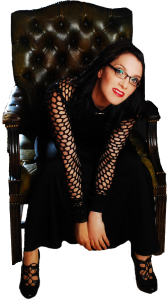
In 2005, at 38 years old, I was officially diagnosed with Asperger’s Syndrome. Asperger’s Syndrome is a condition on the autistic spectrum now reclassified as being an Autism Spectrum Disorder (A.S.D).
We tend not to use the term Asperger’s Syndrome anymore. This is for two main reasons. Since 2013, the DSM-5 merged Asperger’s and other related conditions into a single ASD diagnosis, recognizing significant overlap and aiming for a more inclusive community identity.
Also, historical research, particularly from the late 2010s, indicates that Hans Asperger was a collaborator with the Nazi regime’s eugenics policies; However, some people still identify with the term. It is the individual’s choice.
Being on the spectrum means that my brain is wired differently from a neurotypical (NT) person. (A Neurotypical is a person whose brain is wired in a way that the medical world considers to be ‘normal’ or typical [most people]).
Auties (what some people with Autism/ Autistic people refer to themselves as) brains tend to function better with logic, the ability to acquire vast knowledge of things that interest them, and observing things in finer detail. Also typical are making decisions without emotional clouding or peer/social pressure, and being comfortable alone for extended periods of time.
Auties are disproportionately (not all) intellectually gifted but are generally considered to have a higher intellectual capacity than NT’s. But we often face barriers in the education system because it does not cater to the way we need to learn. I highlight these strengths first, as Autism is often portrayed as something ‘wrong’ with people.
Autism is largely a ‘different’ way of understanding and perceiving things because the brain wiring is atypical. It can be a problem, though, mostly because the world caters to the typical-brained person. However, there are areas we might find difficult, or challenging, even if not part of the environment or people’s attitudes towards us.
The parts of the brain that control social interactions tend to be less developed, or a-typically developed. This means Auties often have difficulties with social interaction and social imagination in the ‘typical’ way.
This can be learnt manually, as I have. I am a reasonably social person, and as an intelligent adult, I have taught myself manually lots of the social rules and cues.
I most likely store the manually learnt information in the manual parts of the brain. This sometimes deliberate attempt to learn social rules and behaviour, matched with my logic and ability not to cloud my judgment with emotion, has meant I can often work things out even better than neurotypicals. It empowers me to deal with the trials of life better than most, or at least not get so emotional about them.
However, frustration is an emotion I may feel more deeply.
Although my A.S. traits were more pronounced when I was a child than they are these days my sensory issues are vastly worse now as an adult. I put this down to the fact that the environment is so much noisier.
When I say ‘nosier’ I don’t’ only mean audibly but visually and smell-wise too.
Coffee is being drunk all around now. This wasn’t the case in my childhood. Now my nervous-system has to tackle animation on the internet, screens in underground stations, and in the street. Mobile phones and other gadgets buzzing, bleeping, and flashing are also painful. Sirens are louder, public transport has loud P.A. pollution.
All this is very disabling. Being an adult demands conformity with various behaviours and commitments. I find this highly stressful too, even without the disrespect my reactions to the stimuli bring me! The disrespect amplifies the stress, which amplifies the sensory impact, which amplifies the stress, which…! Living the life of an adult – dealing with office politics, trying to fit in socially, being measured socially, the expectations of compliance with certain socially expected ideologies and developmental ‘norms’, is stressful. I didn’t have to deal with all that as a child. I was left to my own space, uninterrupted much of the time. Two of my schools were in a country setting – one with only about 5 pupils in the class.
Puppeting Bearsac used to help me override the sensory issues. I didn’t need to use him to communicate through, as many people assumed. I guess it seems odd seeing an adult making a teddy bear talk. People tend to need to make sense of what they find odd or don’t understand.
Sometimes our own barriers can get in the way of us developing a broad sense of ourselves.
Sometimes the ‘well-meaning’ intentions of others can be barriers -But perhaps that should be a blog rather than making this page any longer than it is already!
Sensory issues
I have sensory overload issues and am oversensitive to some sounds, smells, tactile and some visual stimuli. I find multitasking challenging if using more than one sense when concentrating or stressed. This can be typical for lots of people on the autistic spectrum.
I do consider my sensory overloads to be impairments but not all my AS traits I have, some traits I see as strengths or purely differences.
There can be challenges of having what is said to be mild Autism or of having developed social skills.
‘Having’ Autism ’mildly’ or being high-functioning can create challenges itself. People do not realise why you appear as weird, naive, self-absorbed, rude, indifferent, unfriendly, overfriendly to them. They miss out on the signs that you might have Autism as you appear very intelligent and the bit they find weird does not match up to that in their minds. If Autism is more obvious then people can understand and maybe make allowances for your seemly odd ways and maybe do not take offence so easily.
People are reasonably good once I have explained to them about Autism. If I have not said anything, then it is easy for people to be offended by me. If people don’t know I have Autism then it can be scary, for them to see me when I react to sensory overload or being overcrowded. When I still had Bearsac’s I used to sniff at his fur. Otherwise, I might put my hands over my ears and la la la la la. Or I might shout ‘shut up’ to inanimate objects that are making a noise. I might lose coordination of thought, speech or movement or simply withdraw.
Therefore I find it makes sense, for their sake, to tell people. There are still a lot of ignorant people (by attitude) though and I often wonder if their attitude is hiding a denial that they suspect they might be on the spectrum too or, at least, a denial of something they feel insecure about in themselves!
Auties often have repetitive behaviour or an unusual hobby or interest, to which they devote a lot of time and may extend into a career. The medical world and some of society sometimes call these interests ‘obsessions’. Bearsac was one such hobby and is one I made up and have never tired of, even though he is no longer with me.
Some of the repetitive behaviour with Bearsac may well be a small part of my Autism, and sniffing at him and kissing him calms me down and grounds me. But what is more a part of Asperger’s is the fact that I don’t worry or care what people think about me and the way I come across with Bearsac (unless it is of detrimental consequence to my reputation). I can do what I enjoy because I enjoy it and don’t care that some people think it odd. The part of the brain that worries about what other people think doesn’t always work in the same way with people with Autism as it does with NTs. NTs appear to be more concerned with what other people think than for their need for self-expression.
I used to think other people don’t think, I know now, they do. However, I still feel people don’t think as much as I do, well, at least I think NTs don’t think as much as I do! For me to translate my unworded thoughts into words, to communicate them, can sometimes be very hard for me, and I often get misunderstood as I haven’t translated my thoughts into speech successfully.The processing between my fast mind and spoken communication gets muddled up or is too slow a process to translate effectively, partly, I feel, because I have a weakness with immediate and short-term memory.
Adults even bullied by children. Being perceived as ‘different’ in a way NTs having difficulty accepting, Auties tend to get bullied or left out more than NTs at school, work and in society in general. This continues into adulthood, often even with adults being bullied by children and teenagers.